Research
Experience design · cultural heritage
Archaeological VR exhibition
- Unity
- XR Interaction Toolkit
- Photogrammetry
- C#
Across Arabia, archaeological sites and prehistoric rock art are fragile, remote, and slowly disappearing. They are hard for students, scholars, or the public to reach in person, and some of it is eroding or being lost outright. This project makes them accessible: a VR exhibition you can walk through and examine up close, from anywhere.
A walkable exhibition of digitized sites
I built it as a Summer Research Assistant at NYU Abu Dhabi’s Advanced Manufacturing and VR Lab under Dr. Oraib Al Ketan and Professor William Zimmerlee, leading the VR application and the 3D asset pipeline. Inside the headset, you move through a reconstructed gallery, pick up an artifact, rotate it, and read its context up close.
How might we let anyone explore these sites without ever being there?
From photo scans to a headset you can move through
The capture side is a photogrammetry pipeline: from photo datasets and depth scans (including an ORBBEC camera), I reconstructed artifacts and terrain in RealityCapture and Metashape, then cleaned them in Blender and exported GLB into Unity.
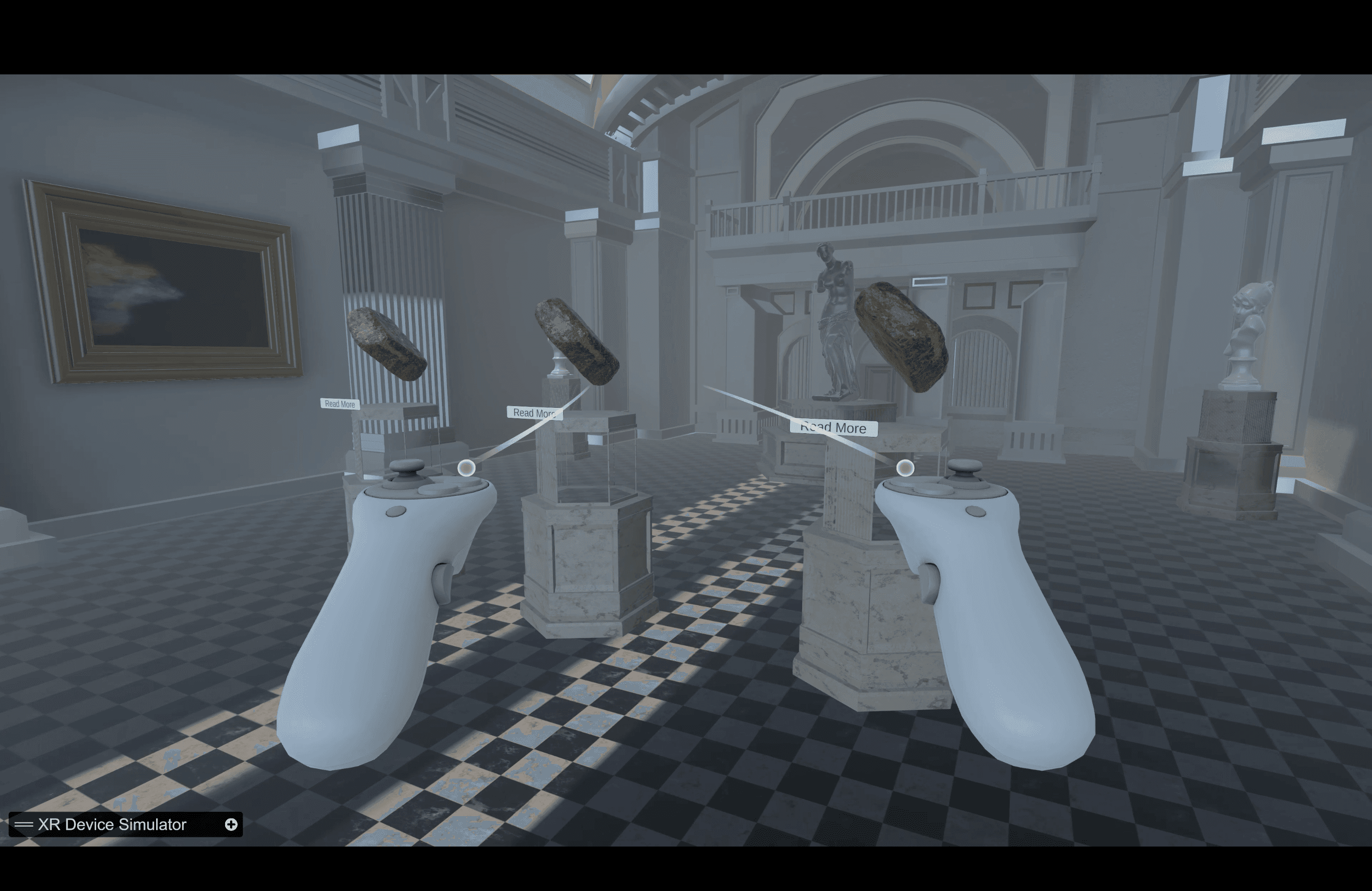
Exhibition walkthrough
The experience runs in Unity with the XR Interaction Toolkit and C#. A lot of the work was performance tuning so dense, photoreal scans stay smooth in a headset while you handle them naturally.
VR demo
Several key artifacts were also 3D-printed as tactile replicas, so the same object can be studied in the headset and then held in the hand. Digitize a site once, and anyone can walk it, while a precise record of fragile heritage is preserved.
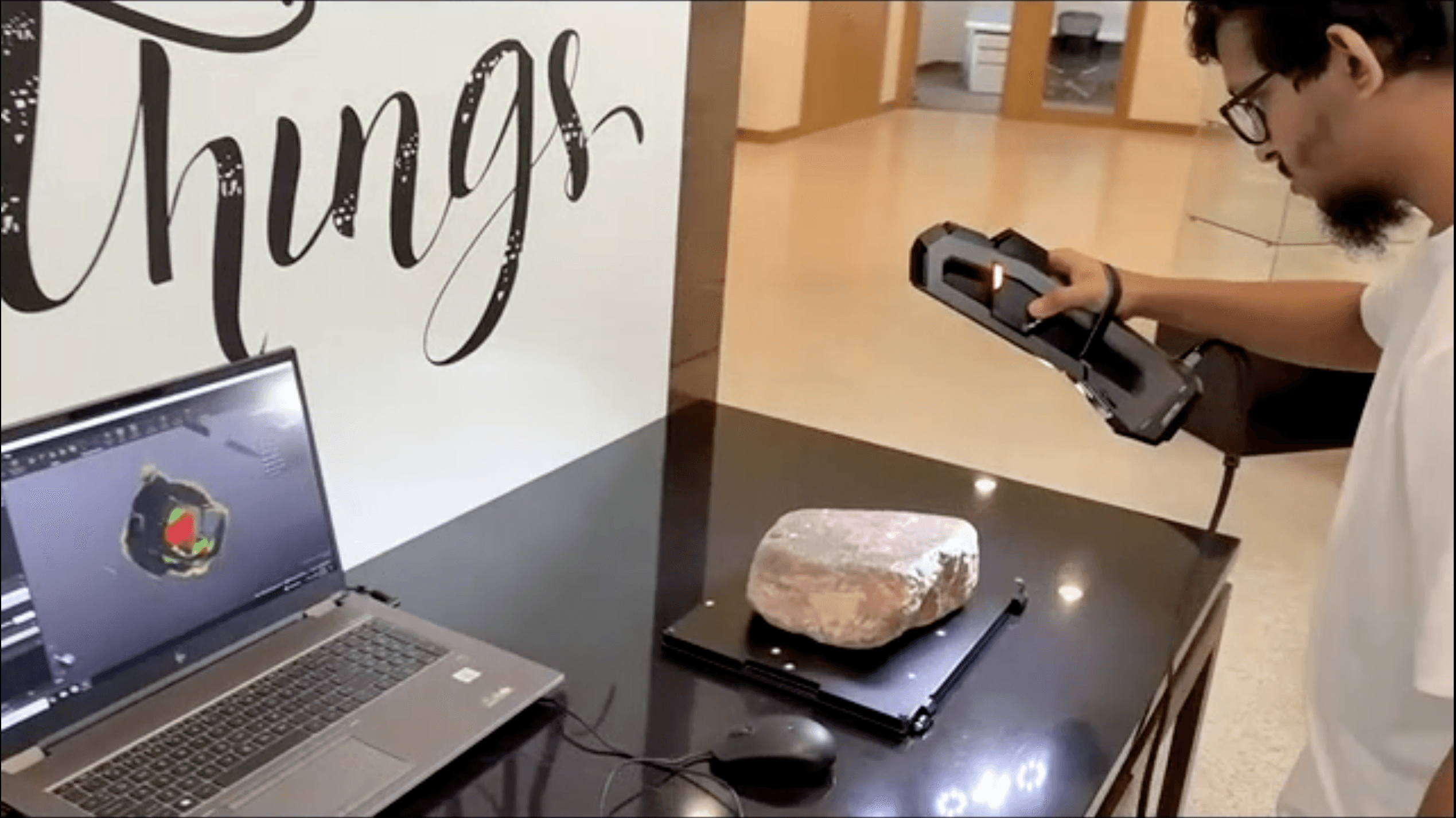
Photogrammetry asset
